
GLASS REINFORCED CONCRETE (GRC)
Glass Reinforced Concrete (GRC) is a high-performance architectural material widely used in modern façade systems.
Combining cement, fine aggregates, water, chemical admixtures, and alkali-resistant glass fibers, GRC offers exceptional design flexibility, durability, and aesthetic appeal. It is an ideal solution for contemporary architecture where lightweight construction, large formats, and bespoke designs are required.
Key Benefits of GRC Façades
Lightweight and Efficient
GRC panels are significantly lighter than traditional precast concrete, reducing structural loads and simplifying transportation and installation. This makes GRC suitable for both new constructions and renovation projects.
High Strength and Robustness
Despite its reduced weight, GRC delivers excellent mechanical strength and impact resistance, ensuring long-term performance in demanding environments.
Fire Safety
GRC is non-combustible, meeting strict fire safety regulations and making it a reliable choice for high-rise buildings and public infrastructure.
Durability with Thin Wall Sections
Thanks to glass fiber reinforcement, GRC allows thin-walled elements without compromising durability, offering long service life and resistance to weathering.
Design Freedom and Bespoke Solutions
GRC supports fully customized façade solutions, including:
- Large-format panels
- Complex geometries
- Curved and sculptural elements
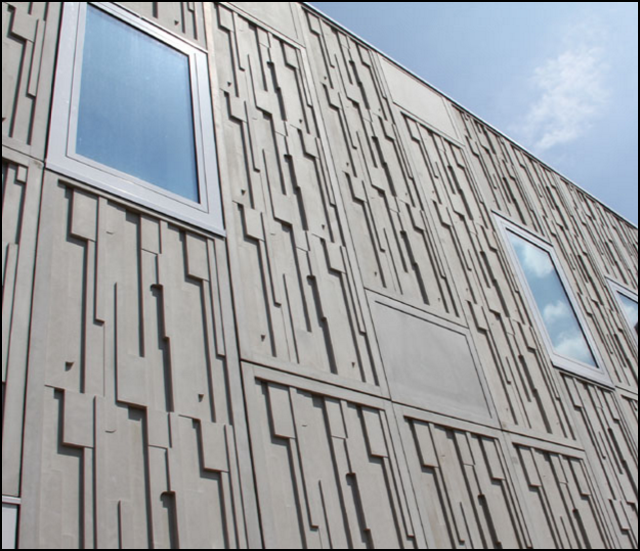
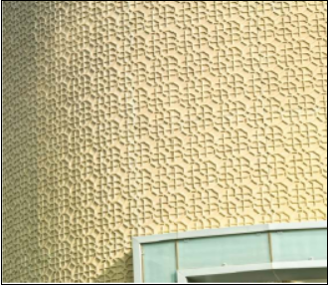
Architects benefit from a wide range of finishes, textures, and colors, enabling unique and expressive designs.
Easy Maintenance
GRC façades require minimal maintenance, retaining their appearance and performance over time with low lifecycle costs.
Cost-Effective Production
Compared to Glass Reinforced Plastic (GRP), GRC is simpler and more economical to produce, especially for large-scale façade applications.
Wide Supplier Availability
The availability of multiple qualified suppliers ensures competitive pricing, material accessibility, and flexibility in project execution.
Technical and Aesthetic Limitations
Edge Sensitivity
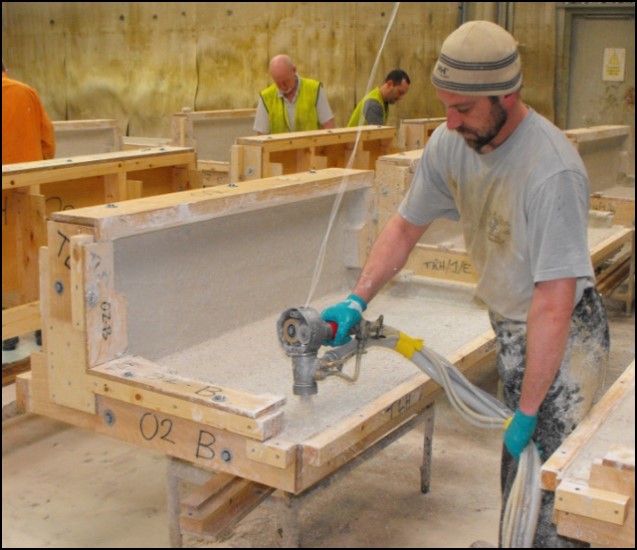
GRC elements may experience chipping at edges, particularly in sprayed or poured products. Proper detailing, handling, and installation techniques are essential to mitigate this risk.
Color Consistency
Achieving uniform color can be challenging, especially with dark pigments, where slight variations may occur due to natural cement properties.
Higher Initial Cost
Compared to conventional cladding systems, GRC can be more expensive upfront. However, this is often offset by its durability, design flexibility, and reduced maintenance costs.
Applications
GRC façade systems are commonly used for:
- Commercial and office buildings
- Residential developments
- Cultural and public buildings
- Architectural renovations and restorations
Why Choose GRC for Façades?
Glass Reinforced Concrete offers a balanced combination of aesthetics, performance, and longevity. Its adaptability, fire safety, and ability to create large, lightweight architectural elements make it a preferred solution for innovative façade design.


